Your people know their jobs. Do they understand the business?
Talent development that strengthens business connectivity, so employees understand how their work connects to the customer, to other functions, and to the outcome the company is chasing.
Working sessions built on your real workstreams. People leave able to name what the work demonstrates, why it matters, and who depends on it.
Two outcomes.
Work gets done. Context gets lost.
Most employees know what they are responsible for. Fewer know what happens before the work reaches them, who depends on their output, or what business goal it serves. When that context is missing, information is lost between functions, and it costs you at every level.
They execute the task without seeing the business around it.
An engineer builds the feature. Whether they know what the customer was trying to solve, or how sales has to explain it, changes the decision they make.
They carry the translation work for everyone below them.
When the team cannot connect its own work to the business, the manager becomes the interpreter, upward, sideways, and in every review cycle.
Information gets lost between functions.
Customer insight stalls before it reaches the team that needs it. Roles get filled against a recycled job description instead of the real work.
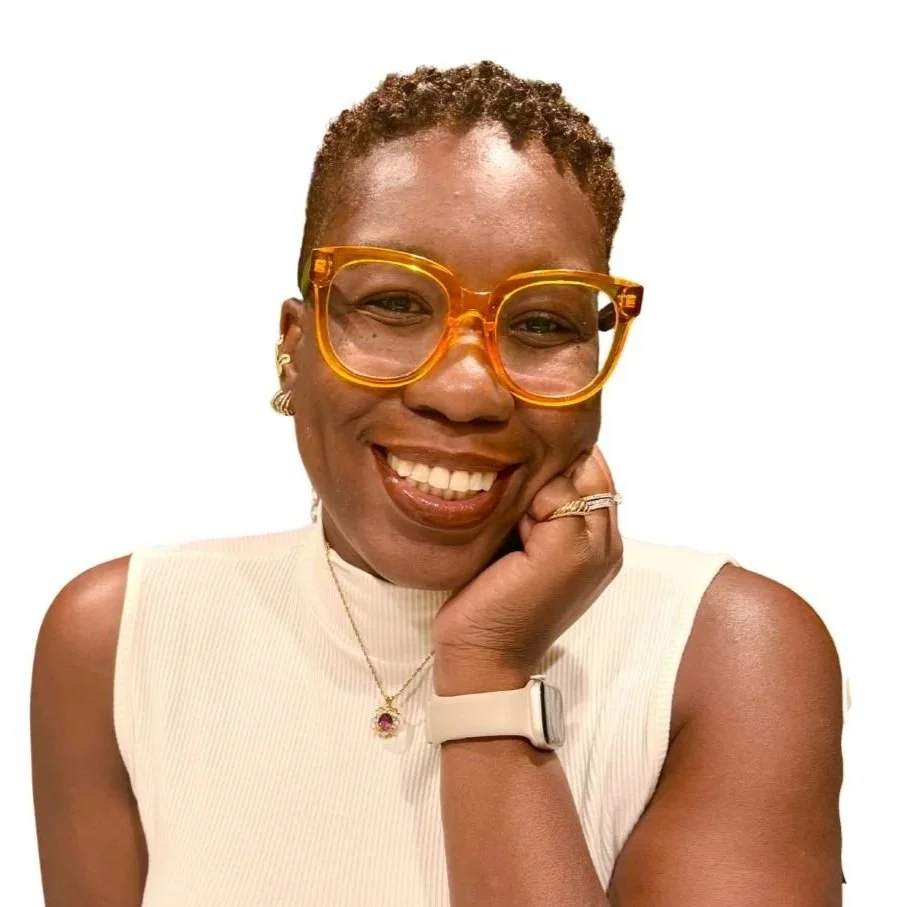
Mariah Bayne
I have experienced this gap from both sides. First as a high performer who could deliver but could not always explain the business value behind my work, and later as a manager expected to coach, develop, and lead people while still carrying my own results.
Across thirteen years in sales, account management, customer success, and operations, I interviewed and hired more than 350 professionals, helped scale a team from eight to thirty-three, and supported the growth of a book of business from $200M to $500M.
I built Growing the Middle because this problem affects more than employee confidence. It affects cross-functional communication, hiring, performance, customer feedback, and the organization's ability to turn strategy into execution. When people cannot connect their work to the customer, to other departments, and to the business goal, that information is lost between functions.
Because I have worked inside the same pressures your employees and managers face, I design development around what people can actually use. I know what gets applied after the session ends, and what quietly gets dropped.
Years across sales, AM, CS, and operations
Professionals hired, interviewed, and trained
Team scaled inside a single organization
New and recurring revenue managed
Uncover. Develop. Activate.
The capability is already in the building. The connective tissue between the work and the business often is not.
We don't begin with a list of skills. We begin with the work.
What did the employee do?
What capability did the work require?
What changed because of it?
What evidence demonstrates the contribution?
Which teams, customers, or decisions does that reach?
Where we start.
These two are the standard programs. They are built and ready to run as-is. If your team needs a different topic, we build that instead.
One discipline, two vantage points. Employees use it to make their own work visible. Leaders use it to see what the team is actually working on, who owns it, and whether it connects to a measurable outcome. Both are working sessions. People build something in the room, not sit and listen.
Infinite Impact Lab
Employees bring their actual projects, not hypotheticals, and leave able to say what the work demonstrates and what it changed. Your next round of performance and promotion conversations gets easier because your people show up with evidence instead of adjectives.
Talent development, ERGs, emerging leaders, workforce initiatives, career programming.
The Alignment Audit
Leaders take one real workstream through the Task to Outcome Framework: what the team is actually doing, who it serves, where AI is touching the workflow, what should be better because of it, and how you will know it worked.
People managers, team leads, delivery and client-facing teams, leadership teams.
Speaking & Facilitated Experiences
Shift how employees understand the value their work creates for the business, so they think past the task, bring more creative solutions, and take more ownership of the outcome. Available for conferences, corporate events, ERGs, and workforce programs.
Have a topic in mind that isn't listed? Send it over and we will build the session around it.
Need something else? Name the topic.
If there is a conversation your organization needs to have, whether it's an offsite theme, a Learning Week session, a leadership summit, or a Heritage Month keynote, tell us the topic and the audience and we will build the session for it.
How we work inside your organization.
You may not have the internal capacity to develop everyone who needs it. That capacity is what we bring in: facilitation, structure, and a method your managers can keep using after we leave. Every session is customized to your real workstreams, not a fixed curriculum.
Talent development workshops
Run for a team, a cohort, or a full program track, using the work your people are already doing.
Manager and leadership training
Give leaders a shared method for seeing the work, assigning ownership, and running better development conversations. Coaching available alongside.
Offsites and strategic planning
Facilitated working sessions where a team maps what it owns, what it is solving for, and what has to be true next quarter.
ERG and community programming
Programming that gives your communities something practical to take back to their roles, not another panel.
Formats that fit your calendar
Every session runs as 60 minutes, 90 minutes, or two hours, virtual or in person. Follow-up sessions and coaching are available for teams that want to keep going.
Works with what you already run
Sessions use your real workstreams and map to your existing review cycle, competency model, or mobility program.
Start with one group
Most partners begin with a single team, ERG, or cohort before committing to a series. Scope and pricing are set together.
See how the sessions actually run.
Two past events, both partnered with Havas and NY Tech Week.
Practical learning should produce practical evidence.
Average confidence increase after workshop
Average workshop rating
Would recommend to a colleague
Community events hosted
What participants said after the session
Understanding how to best prepare for conversations with leadership, reviews, and job opportunities using frameworks and methods.
It condensed the way that I think about all of the various parts of my job into very clear and concise language that an employer can actually use to understand my work and my value.
How to articulate my value not only to stakeholders but to myself. Within minutes I was able to gather something that would have taken me forever.
That I need to track both the company’s and my own metrics to have evidence to improve my confidence when speaking of my value.
That my soft skills are valuable and how they transfer to business impact.
Changing the language on how I talk about my role, and understanding how my daily tasks are important for not only the company but my growth.
The KPI table was especially helpful. It was great to have a list of possible KPIs that I can create as I track my career progress.
Providing a structure and approach for articulating our value and what we do.
Learning how to use CEO language for career progress.
Start a conversation.
A few details about your team and timeline are enough to get started.
You may already have more capability inside your workforce than you can currently see.
Tell us who you are trying to develop and what is getting in the way. If a session is the right fit, we will scope one. If it isn't, we will say so.